Successfully implementing RiskTalk voice technology depends less on the software itself and more on how the change is managed across people, devices, and partnerships.
Digital Strategy
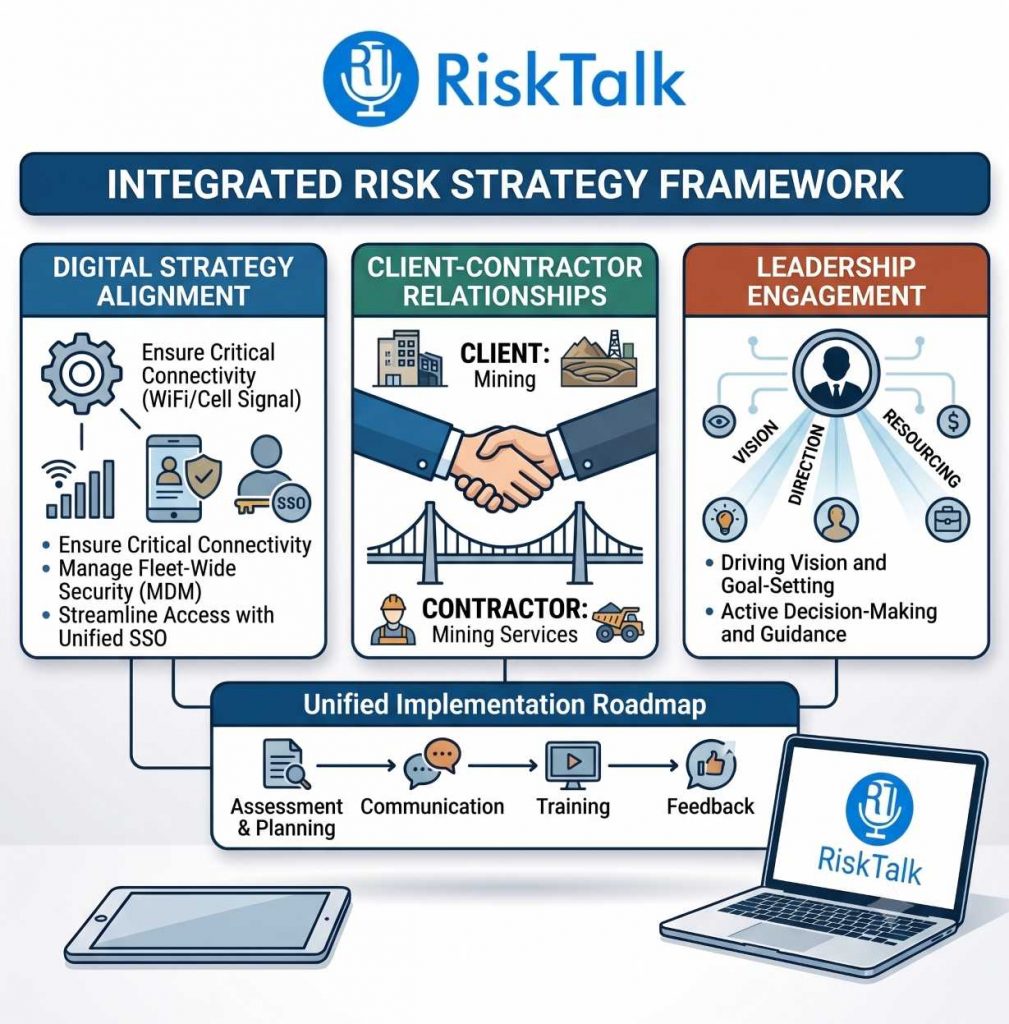
A clear digital strategy comes first. Organisations must decide how RiskTalk fits within their broader technology roadmap, then address the practicalities of device and mobile management: provisioning smartphones or shared devices, managing connectivity in the field, applying mobile device management (MDM) policies, and ensuring workers can access the tool reliably wherever the job takes them.
Client – Contractor Relationships
Client and contractor relationships are equally critical. Where work is delivered across organisational boundaries, expectations around voice-based risk assessments must be aligned early. Involving clients in the rollout builds confidence that safety standards are strengthened, not disrupted, while engaging contractors ensures consistent adoption across the entire workforce — not just direct employees.
Leadership Engagement
Finally, management engagement makes or breaks the transition. Leaders who visibly use the platform, review assessments, and act on AI coach feedback signal that RiskTalk matters. When supervisors respond to front-line insights in real time, workers see their voices being heard — literally.
With the right strategy, aligned partners, and engaged leadership, RiskTalk becomes embedded as the way work gets done.